
Why Professional Surveyors Cost More Than Cheaper Options
A boundary peg that appears to be in the right place, or a low quote that arrives quickly, can look like a straightforward saving. But property boundaries, levels, easements and subdivision plans carry legal and construction consequences. That is why professional surveyors cost more than some cheaper alternatives. The short answer is that a professional survey is not simply a set of measurements. It is accountable advice, reliable field data and work prepared for the decisions that follow.
For a homeowner, builder or developer, the relevant comparison is rarely the initial fee alone. It is the cost of obtaining information that can be relied on for design, approvals, construction, a property transaction or registration. Where incorrect information causes a redesign, a building encroachment, a delayed approval or a title issue, the lower upfront price can become the most expensive option.
A professional survey carries legal responsibility
In NSW, a registered surveyor has university qualifications, supervised practical experience and professional competency requirements. They are authorised to undertake cadastral surveying work that defines or re-establishes property boundaries and supports plans lodged with NSW Land Registry Services.
That registration matters when the work concerns a boundary, easement, subdivision, strata plan or title. A registered surveyor is responsible for assessing the available evidence, applying the relevant legislation and standards, and standing behind the result. This is very different from locating an old fence line, measuring from a visible peg or producing a drawing based on unverified information.
Cheaper alternatives may be useful for limited preliminary purposes. For example, a basic site measure can help someone explore an early design idea. However, it may not be appropriate for a building certificate, a boundary dispute, construction set-out or a plan requiring registration. The key question is not whether someone can collect measurements. It is whether those measurements are suitable for the decision being made.
Why professional surveyors cost more than cheaper alternatives
The quote for a professional survey reflects work that is often invisible to the client but critical to the final result. Fieldwork is only one part of the job. Before attending site, the surveyor may need to obtain title information, examine deposited plans, review historic survey records and identify issues that could affect the scope.
On site, the team must locate sufficient evidence, establish control, observe features and capture data accurately. Difficult Central Coast sites can add genuine complexity. Steep terrain, dense vegetation, waterfront conditions, older subdivisions, restricted access and missing or disturbed marks all require more investigation than a clear, level block.
After the site visit, the information must be processed, checked and presented in a form that architects, engineers, builders, councils or land registry authorities can use. For cadastral work, the process may involve detailed calculations, plan preparation, statutory documentation and lodgement requirements. A lower quote may exclude some of these stages, assume ideal conditions or provide a product with narrower permitted use.
The equipment is valuable, but the judgement is the real value
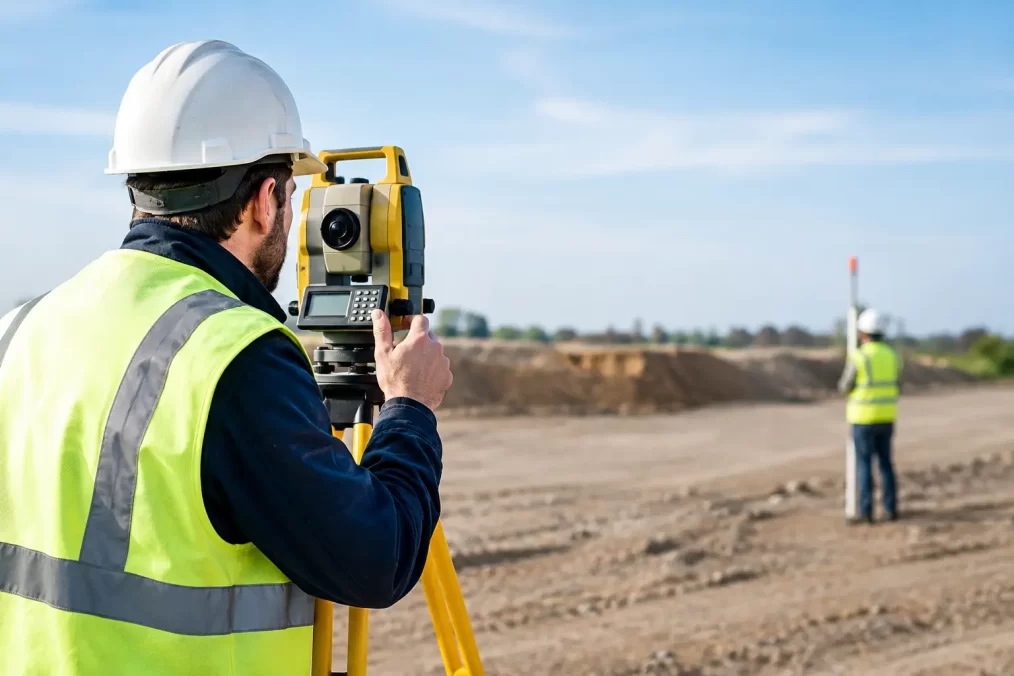
Modern Trimble surveying technology can measure positions and levels efficiently, but equipment does not interpret title evidence, identify an encroachment risk or determine whether a boundary has been correctly re-established. Those tasks rely on professional judgement.
A capable survey team combines precise instruments with established field procedures, quality checks and experience. They know when a result does not align with historic plans, when more marks need to be found, and when a site condition needs to be raised with the client or design team before it becomes a construction problem.
This distinction becomes especially important with contour and detail surveys. Architects and engineers depend on accurate levels, spot heights, visible services, structures, drainage features and site constraints to design with confidence. If critical site information is missed or levels are unreliable, the design can need revision after work has already begun.
Cheaper quotes can describe a different scope
Not every price difference means one provider is overcharging. Surveying scopes vary considerably, and comparing two quotes line by line is essential.
One quote may include a registered surveyor’s boundary determination, title research, marks placed or identified, a detailed plan and direct coordination with a building designer. Another may cover a site visit and a simplified sketch only. Both can be legitimate services, but they are not equivalent.
Before selecting a provider, ask what survey type is being supplied and what it is intended to support. Confirm whether the fee includes title and plan research, field investigation, drafting, survey marks, council or NSW Land Registry Services requirements, and communication with other consultants. Also ask what happens if the site reveals missing marks, access issues or inconsistencies in the records.
Clear scope does not eliminate every variation. Surveying is investigative work, particularly on older or complex sites. It does, however, prevent assumptions from becoming unexpected costs later.
The cost of getting set-out wrong is far higher
Construction set-out is a good example of where professional surveying protects the broader project budget. Setting out a dwelling, retaining wall, drainage line or structure requires the design to be transferred accurately onto the ground. An error can affect setbacks, structural coordination, levels, service connections and compliance.
For a new home close to a side boundary, a small mistake can create a major issue. If excavation, slabs or walls proceed in the wrong location, rectification may involve builders, certifiers, designers, neighbours, insurers and legal advisers. The cost is not confined to physical work. It can also mean lost time, disrupted trades and pressure on the construction programme.
The same principle applies to subdivisions and easements. These projects involve property rights, not just lines on a plan. A registered surveyor helps ensure the survey component is prepared correctly from the outset and coordinated with planners, engineers, solicitors and authorities as required.
Local experience reduces avoidable delays
Local knowledge is not a substitute for proper surveying, but it helps work move efficiently. Surveyors familiar with the Central Coast understand the types of terrain, development patterns and approval pressures that commonly affect projects in the area.
They are also accustomed to working alongside architects, town planners, civil engineers, structural engineers and project managers. Early coordination can identify whether a proposed design needs a detailed contour survey, floor level information, an identification survey, boundary mark-out or construction set-out. Ordering the right survey at the right stage avoids duplicate site visits and rushed redesigns.
For property owners, this is often the practical benefit of engaging an experienced consultancy. Rather than receiving a drawing with no further guidance, they have a survey partner who can explain what the result means and identify the next sensible step.
When a lower-cost option may be appropriate
There are situations where a lower-cost, limited service is reasonable. A preliminary measurement for an informal concept, or a non-legal site plan for internal planning, may not need the full investigation required for a cadastral survey. The important point is to be clear about its limitations before relying on it.
Do not assume that an aerial image, online boundary overlay, old plan, fence alignment or a neighbour’s advice confirms a legal boundary. These sources can be helpful background information, but they cannot replace a properly undertaken boundary survey when property rights or construction decisions are involved.
The most useful question to ask is: what risk does this survey need to manage? If the answer involves a title, approval, building location, subdivision, easement or dispute, registered expertise is usually the appropriate level of service.
A professional survey fee buys more than a plan. It buys a careful process, accountable advice and information that helps the rest of the project proceed with fewer surprises. Before accepting the cheapest price, make sure it covers the work your property and your next decision genuinely require.