
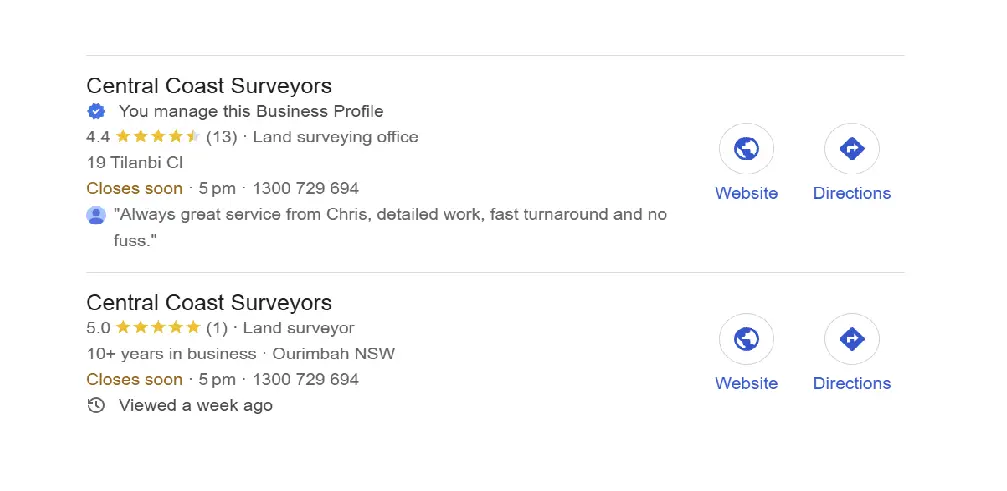
How to Read Surveyor Ratings Before You Engage
A five-star review is reassuring when you need a survey, but it should not be the only reason you engage a consultant. Surveyor ratings can show whether a business is responsive, organised and easy to work with. They cannot, on their own, confirm that the survey scope is right for your project, that plans will meet NSW requirements, or that the work is being completed under the direction of a registered surveyor.
For Central Coast property owners and project teams, the cost of choosing on ratings alone can be significant. An incorrect boundary assumption can delay a fence, building approval or sale. A topographical survey that lacks the levels or features your designer needs can create rework before plans are lodged. The aim is not to ignore online feedback. It is to use it as one practical part of a better decision.
What Surveyor Ratings Can Tell You
Reviews are most useful when they describe the experience around the technical service. Look for specific comments about communication, site access, turnaround times, clear explanations and coordination with architects, builders or councils. These details often indicate how a surveying practice manages projects once the fieldwork is complete.
A review saying, “They were professional and did a great job,” is positive but limited. A review explaining that the surveyor identified an issue early, delivered the agreed survey for a design deadline, or helped clarify a boundary question is far more useful. It gives context about the type of work performed and the outcome for the client.
The pattern matters more than one exceptional review. Consistent feedback across several projects can suggest reliable service standards. Pay particular attention to recent ratings. A consultancy may have changed staff, processes or workload over time, so comments from several years ago may not reflect the service you will receive now.
For homeowners, reviews can also reveal whether a surveyor explains technical terms without making the process harder than it needs to be. Boundary, title and easement matters can be unfamiliar territory. You should expect a straightforward explanation of what survey is required, what it can establish and what happens next.
What Ratings Cannot Confirm
Surveying is not a generic trade service. Different projects require different survey types, legal responsibilities and levels of accuracy. A highly rated firm may be excellent at construction set-out but not be the right fit for a complex Torrens title subdivision. Likewise, a review for a simple residential detail survey does not demonstrate experience with waterfront licence transfers, strata plans or easement creation.
Ratings also do not confirm registration. In NSW, cadastral work such as boundary definition and subdivision plans must be undertaken by, or appropriately supervised by, a registered surveyor. This is central to the legal reliability of the work. Before engaging a consultant for title, boundary or subdivision matters, ask who will be responsible for the survey and whether they are registered for the work required.
Nor can a star rating tell you whether two quotes cover the same deliverables. One quote may allow for fieldwork only, while another includes research, plan preparation, survey mark searches, lodgement requirements and coordination with your wider consultant team. The cheaper figure may not be cheaper once missing work, variations or delays are considered.
Read Surveyor Ratings in Context
Start by identifying your actual project need. If you are planning an extension, new home or retaining wall, your architect or builder may need a detail and contour survey, an identification survey, boundary mark-out or construction set-out. If you are selling, buying, resolving an encroachment concern or seeking a building certificate, the required service may be different again.
Then read reviews from clients with a similar situation. A developer should look for evidence of subdivision capability, accurate documentation and coordination across planners, engineers and NSW Land Registry Services requirements. A homeowner planning a new fence should focus on feedback about boundary identification, site communication and clear advice before construction starts.
Location can matter as well. Central Coast sites regularly bring practical variables that affect survey work: steep terrain, bushland, waterfront conditions, older survey evidence, restricted access and tight residential streets. A surveyor familiar with the local area is more likely to anticipate site constraints, but local knowledge should complement – not replace – proper research and compliant fieldwork.
It is also worth reading how a business responds to less favourable feedback. No professional service can guarantee every project will proceed without an unexpected issue, especially where title records, weather, access or third-party approvals are involved. A measured response that explains the situation without disclosing client details can be more reassuring than a flawless-looking profile with little substance.
Questions to Ask Beyond Surveyor Ratings
Once ratings have helped you form a shortlist, a short conversation should establish whether the consultant is suitable. Ask what survey is recommended for your purpose and why. A capable surveyor should be able to explain the scope in plain language, including what information you will receive and any limitations you should understand.
Confirm who will undertake and supervise the work. For boundary, identification, easement and subdivision matters, ask whether a registered surveyor will be responsible for the cadastral component. This is not unnecessary formality. It protects the integrity of decisions that may affect title, construction location and future property transactions.
Ask what information the surveyor needs before attending site. Existing plans, a deposited plan reference, development drawings, council correspondence and details of proposed works can all help define the correct scope. Sharing this material early reduces the chance that a survey is commissioned for one purpose and later found unsuitable for another.
Timeframes should be discussed with care. A fast turnaround is valuable when a designer is waiting to start or a construction crew is booked, but the date should reflect the complexity of the work. Site conditions, title research, survey control, weather and authority requirements can all affect delivery. The right question is not simply, “How quickly can you do it?” It is, “What is the realistic programme for this scope, and what could change it?”
Finally, request clarity on inclusions and exclusions. A professional quote should identify the service being provided, the expected deliverables and assumptions such as access to the property. If your project will proceed through design, approval, construction and registration, ask whether the consultant can support each stage or coordinate effectively with the professionals who will.
Why Scope and Communication Protect Your Project
The best surveying relationship is rarely based on the highest rating or the lowest quote. It is based on the surveyor understanding the decision you need to make next. For a homeowner, that may be knowing where a proposed fence can go. For an architect, it may be receiving reliable levels and features for a design. For a developer, it may be moving from an initial feasibility survey through subdivision plans and final title registration without changing consultants midway.
Clear scope prevents common project friction. It reduces the risk of sending incomplete information to a designer, setting out a structure from an unverified assumption, or discovering late in the process that a separate identification survey is required. It also helps every consultant work from the same reliable base information.
At Central Coast Surveyors, this is why the initial discussion matters as much as the field visit. The right survey work should make the next step easier, whether that is preparing plans, obtaining advice, starting construction or progressing a title matter.
Use ratings to identify businesses that appear dependable and responsive, then test that first impression with the right questions. A surveyor who takes the time to define the scope, explain the process and identify risks early can save far more than the time it takes to make an informed enquiry.