
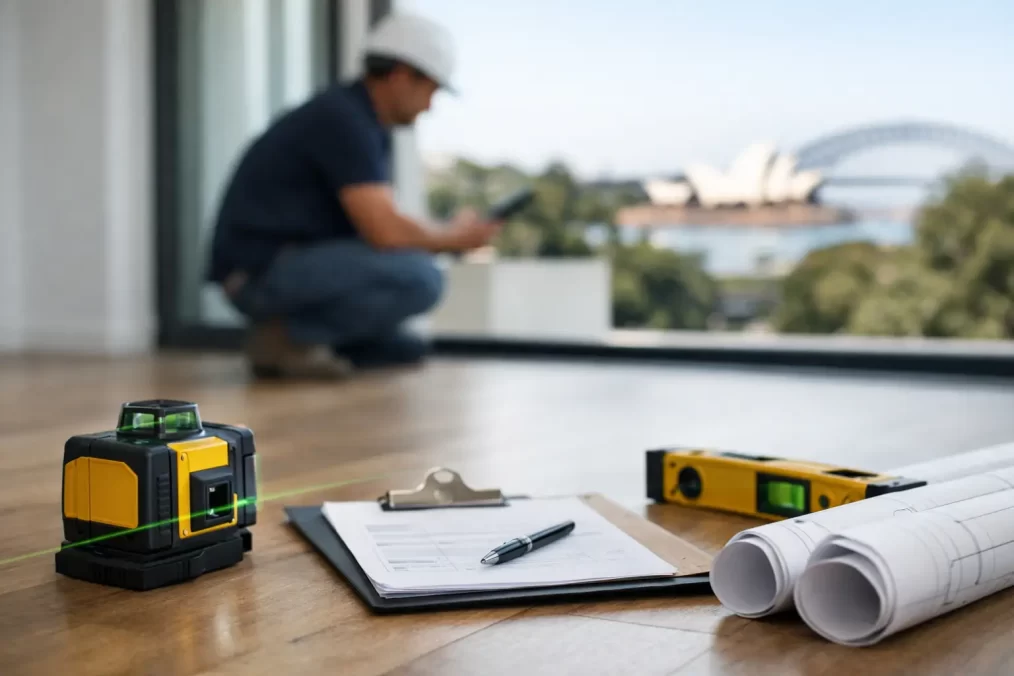
Floor Level Report NSW: What You Need to Know
A floor level report NSW requirement usually appears when a project is already moving – plans are drafted, approvals are underway, or construction has started and someone needs confirmation that the finished floor level is correct. That is exactly why this report matters. If the level is wrong, the problem can affect flood compliance, drainage performance, certification, and sometimes the viability of the build itself.
For homeowners, builders, designers and developers across the Central Coast, a floor level report is not just another box to tick. It is a survey-based record used to confirm the relationship between a building’s floor level and the site levels, nominated datum, flood controls or approved design requirements. When timing is tight and approvals depend on accurate information, getting the survey right early can save a great deal of rework later.
What is a floor level report in NSW?
A floor level report is a formal survey document prepared by a registered surveyor that identifies the level of a building floor, usually in relation to Australian Height Datum or another required reference level. Depending on the project, it may confirm an existing floor level, a proposed finished floor level, or the as-built level after construction.
In NSW, these reports are commonly used to support development applications, complying development, occupation certificate requirements, flood-prone land assessments and council compliance matters. The exact content can vary depending on what the council, certifier, engineer or planner has requested. Some projects need a simple confirmation of floor height. Others require a broader plan showing surrounding ground levels, road levels, drainage context and flood planning benchmarks.
That variation matters. A floor level report prepared for a small residential addition may look quite different from one required for a new dwelling in a flood-affected area or a multi-lot development. The principle is the same, though – accurate levels are being checked against a rule, approval condition or design requirement.
When a floor level report NSW is usually required
The most common trigger is flood-related planning control. If a site sits within or near flood-prone land, council or a private certifier may require evidence that the habitable floor level meets the minimum level set by flood studies, planning controls or engineering advice. This is often requested before approval, during construction, or at completion.
It is also common where a development consent includes a condition requiring the finished floor level to match a nominated RL. In that case, the report provides objective confirmation that the built outcome matches the approval. Builders and project managers often rely on this when they need clear survey evidence before progressing to the next stage.
There are also compliance situations where an owner needs to verify the level of an existing structure. That can happen if there is uncertainty about past approvals, if flood planning controls have changed, or if a certifier needs additional information for a building certificate or occupation process.
Why accuracy matters more than speed alone
Fast turnaround is important, especially when a slab pour, frame stage or final certification is waiting on survey information. But speed without precision creates risk. Floor levels can only be trusted when they are established from reliable control, checked properly on site and reduced to the correct datum.
A few centimetres may not sound like much, but on some sites that difference can decide whether a dwelling complies with flood planning levels or whether additional design work is needed. It can also affect driveway gradients, stormwater design and the relationship between indoor floor levels and external finished surfaces.
That is why registered surveyors are typically engaged for this work. They are trained to establish and verify levels with the precision required for planning, certification and construction. For clients, that means less guesswork and fewer disputes about whether the numbers are correct.
What a floor level report typically includes
Most floor level reports identify the surveyed floor level and show how it relates to a recognised datum or benchmark. They may also include the site address, lot details, survey date, methodology, relevant reduced levels, and a plan or notation confirming the position of the measured building.
Where flood or drainage issues are involved, the report may include surrounding ground levels, kerb or road levels, and reference to the minimum required habitable floor level. On construction projects, the report may distinguish between proposed and as-built levels so the design team and certifier can see whether the approved intent has been achieved.
The level of detail should match the decision the report is meant to support. A concise report can be enough for one project, while another may need a broader level survey to avoid back-and-forth with council or other consultants.
How the survey process works
The process starts with understanding why the report is needed. That sounds obvious, but it is where many delays begin. If the surveyor is only told to “check the floor level” without seeing the relevant approval condition, flood requirement or certifier request, the wrong information can be collected.
Once the purpose is clear, the surveyor attends site, establishes survey control and records the relevant levels using professional equipment. Those observations are then processed and checked against the required reference level or approval benchmark. The final report is prepared in a format suitable for the authority or consultant requesting it.
On straightforward jobs, this can move quickly. On more complex sites, extra work may be needed to confirm datum, reconcile historic information or coordinate with engineers, architects or certifiers. The key is getting everyone aligned on what the report must prove.
Common issues that hold projects up
One of the most common problems is assuming a contour survey or set-out plan already covers the floor level reporting requirement. Sometimes it does, but often it does not. A design survey may provide useful level information, yet a certifier may still require a dedicated report confirming the actual built floor level against a condition of consent.
Another issue is confusion around terminology. “FFL”, “habitable floor level”, “slab level” and “minimum RL” are related terms, but they are not always interchangeable. If the wrong reference is used, the report may not answer the certifier’s question.
Timing also causes trouble. If a report is left until the building is complete and the finished level does not comply, the options become more limited and more expensive. By contrast, checking levels at the right stage of the build gives the project team a chance to correct issues before they become structural or certification problems.
Choosing the right survey support
Not every project needs a complicated response, but every project does need the right one. A homeowner building on a relatively flat block may only need a straightforward report to satisfy a condition. A builder working in a flood-affected area may need floor levels checked at several points during construction. A developer may need floor level information integrated with broader subdivision, drainage and civil design requirements.
This is where local experience makes a practical difference. Surveyors who regularly work with Central Coast councils, certifiers and consultants understand the approval environment, common reporting requests and the level of detail likely to be accepted without unnecessary delay. They also know when a simple report is enough and when a more detailed survey will save time overall.
For clients who want one point of contact across the full project, it also helps to work with a survey team that can support more than one stage – from initial detail and contour survey through set-out, compliance reporting and final plan work. Central Coast Surveyors often works this way, which reduces handover issues and keeps survey control consistent across the project lifecycle.
Getting better outcomes from your floor level report NSW request
The best results usually come from providing the surveyor with the approval condition, architectural plan, engineering detail or certifier email that triggered the request. That gives the surveyor a clear target and reduces the chance of producing a report that needs to be revised.
It also helps to raise the issue early. If there is any chance the site is flood affected, or if the consent nominates a minimum floor level, it is worth planning the reporting stage before the build reaches a critical point. That small step can protect the construction program and avoid unnecessary cost.
A floor level report NSW is a technical document, but its value is practical. It gives owners, builders and consultants confidence that the floor level is where it needs to be – not roughly right, but verified. When approvals, certification and buildability all depend on accurate levels, that certainty is worth having before the next decision is made.