
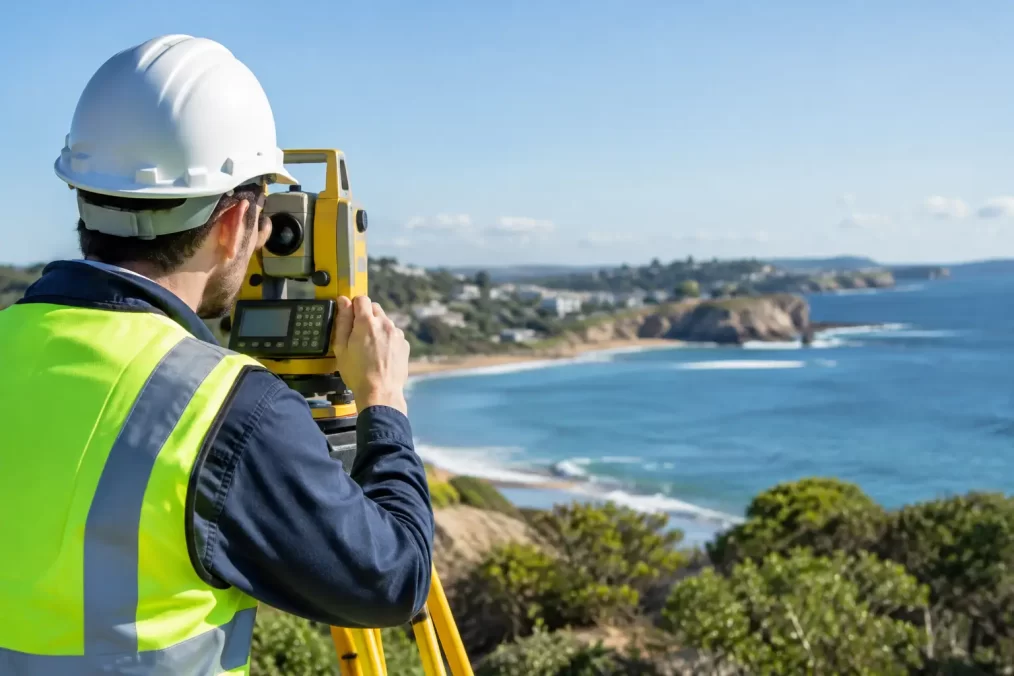
What Terrigal Surveyor Reviews Should Tell You
A surveyor is often engaged at the point when a project cannot afford uncertainty. A boundary needs to be confirmed before a fence or extension proceeds, an architect needs reliable levels for a design, or a subdivision plan needs to move through the NSW registration process. That is why Terrigal surveyor reviews are most useful when they reveal how a consultant performs under real project pressure, not simply whether a client thought they were pleasant to deal with.
A five-star rating can be a useful starting point, but it is not the full picture. The comments worth reading closely usually describe the work completed, the quality of communication, how the surveyor dealt with a difficult site or title issue, and whether the information arrived in time for the next consultant to act.
What Terrigal surveyor reviews should cover
The strongest reviews tend to be specific. Rather than saying only that a surveyor was “great”, they may refer to an identification survey for a building certificate, a detail and contour survey for a new home, a boundary mark-out, construction set-out, or a subdivision. Specificity helps you work out whether the firm has handled work similar to yours.
For a homeowner in Terrigal, that might mean a sloping block, established vegetation, older boundary evidence or a site near the coast. For a builder or architect, it may mean accurate set-out, prompt responses to design queries and survey files that can be used without rework. For a developer, the relevant experience may be managing easements, staged subdivisions, strata plans and registration requirements.
Look for a pattern across reviews, rather than putting too much weight on one glowing or disappointing comment. A consistent record of clear communication, reliable turnaround and accurate deliverables is more meaningful than a high volume of generic praise.
Accuracy is not a marketing extra
Surveying is technical work with legal, design and construction consequences. A review cannot independently prove the accuracy of a plan, but it can indicate whether a firm is methodical, responsive to questions and capable of resolving issues before they cause larger delays.
Comments about correct boundary advice, useful site information, plans accepted for the intended purpose, or smooth coordination with architects and engineers are good signs. Equally, take notice if reviews repeatedly mention missed dates, unclear scopes or clients being left unsure about what was delivered.
It is also sensible to confirm that the person responsible for cadastral work is a registered surveyor. In NSW, boundary definition, subdivision plans and certain title-related matters require registered expertise. Registration is not a substitute for good service, but it is a baseline check that should sit alongside reviews.
Match the feedback to the survey you need
Not all survey work is interchangeable. A consultant may receive excellent feedback for a fast feature and level survey, yet that does not automatically tell you how they manage a complex boundary reinstatement or a multi-lot subdivision. Read reviews with your required outcome in mind.
If you are buying, selling or responding to a council request, reviews that mention identification surveys, encroachments, building certificates or waterfront licence transfers may be relevant. These matters often involve interpreting title information and site occupation carefully, not simply measuring visible fences.
If you are preparing plans for a renovation or new dwelling, look for feedback about detail and contour surveys, floor level reports and collaboration with designers. An architect needs more than a basic sketch of the block. They need dependable levels, features, structures, services where visible and relevant site constraints captured in a format that supports design decisions.
For construction teams, comments about set-out accuracy and site responsiveness carry more weight. A set-out delay can affect excavation, formwork, trades and programme sequencing. The best surveying partner understands that measurements must be right, but also that a quick answer on site can prevent an expensive hold-up.
Read between the lines on turnaround
“Fast service” appears in many reviews, but the useful question is what was delivered quickly and whether the scope was properly understood first. A straightforward residential topographical survey may be turned around promptly once site access, requirements and weather allow. A boundary survey can take longer where old plans, marks, occupation or adjoining title information need careful investigation.
Be cautious of a promise that sounds fast without an explanation of process. A professional surveyor should be able to discuss the likely fieldwork, office processing, plan preparation and any external steps involved. For example, registration of a subdivision plan has dependencies beyond the surveyor’s control, including approvals and NSW Land Registry Services requirements.
Good reviews often reveal this distinction indirectly. Clients may mention that they were kept informed, that realistic timeframes were set early, or that the surveyor helped keep other consultants moving. These are signs of project management as well as technical capability.
Service matters when several consultants are involved
Surveying rarely happens in isolation. A residential project may involve the owner, builder, architect, planner, engineer, certifier and council. A development can add solicitors, utility authorities, project managers and sales teams. Reviews that mention clear coordination are especially valuable because poor information flow between consultants is a common source of avoidable rework.
Ask whether the surveyor provided information in the format required by the next person in the process. A plan that is technically sound but delivered too late, missing key detail or difficult for a designer to interpret can still create friction. The right consultant should clarify the intended use of the survey before commencing work.
This is where local experience has practical value. Familiarity with Central Coast terrain, common development patterns and the expectations of local project teams can improve the questions asked at the start. It does not replace proper investigation, but it can reduce assumptions and help identify likely issues earlier.
Questions to ask after reading reviews
Reviews should help you shortlist providers, not replace a proper conversation. Once you have identified a surveyor whose feedback is relevant, ask direct questions about your site and required deliverable.
You may need to confirm whether a registered surveyor will oversee the work, what information you will receive, when it is likely to be issued and what factors could affect timing or cost. If the job relates to boundaries, ask whether existing marks and occupation will need to be assessed. If it supports a building design, explain what your architect or builder needs from the survey.
A detailed quote should identify the scope rather than relying on a vague description such as “site survey”. It should make clear whether the work includes site measurement, plan preparation, boundary investigation, pegging, council or title registration steps, and liaison with other consultants where required. Lower pricing can be attractive, but it is only comparable when the scope and responsibility are comparable too.
Why a measured response can be a good sign
The most reassuring surveyor is not always the one who gives an instant yes to every request. On complicated land matters, a careful response may involve asking for the deposited plan, title details, architectural drawings, site address, intended purpose and access information before committing to a methodology or timeframe.
That care protects the client. It reduces the chance of commissioning the wrong survey, receiving a plan that does not meet its intended purpose, or discovering late in the process that additional boundary or compliance work is required. It also enables a surveyor to coordinate the work properly with the people who will rely on it.
Central Coast Surveyors takes this practical approach across projects from early site information through construction and title registration. The aim is not to add unnecessary steps, but to make sure the survey work supports the decision or approval in front of you.
Before choosing on reviews alone, take a moment to describe the outcome you need and ask how the survey will help achieve it. A clear answer at that stage is often more valuable than the highest rating on the page.